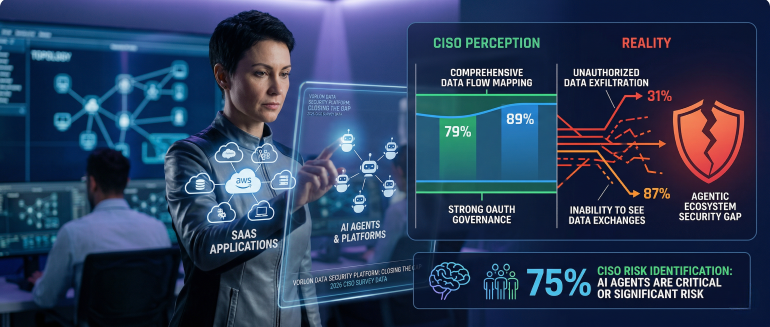
The rapid democratization of generative artificial intelligence and autonomous software agents has radically transformed the modern enterprise perimeter, triggering an unprecedented reassessment among corporate security leaders. A comprehensive survey of five hundred Chief Information Security Officers across major United States enterprises with more than five hundred employees has revealed a dramatic shift in how executive suites perceive emerging threats. According to the findings, nearly a third of respondents—thirty-one percent—admitted their organizations have already detected unauthorized data exfiltration taking place directly between software-as-a-service platforms, highlighting an invisible, shadow threat landscape that legacy security appliances are fundamentally ill-equipped to combat.
For years, enterprise cybersecurity focused primarily on fortifying external network perimeters, monitoring ingress and egress endpoints, and managing user access credentials. However, the contemporary workplace relies on hyper-connected application ecosystems where cloud platforms freely exchange proprietary data via webhooks, third-party plug-ins, and artificial intelligence extensions. When employees integrate autonomous AI tools or third-party workflow automations into systems like Slack, Salesforce, Microsoft 365, or Google Workspace, sensitive corporate IP, customer information, and financial records can be replicated, summarized, and routed across external servers entirely outside the purview of centralized IT administration.
Industry analysts emphasize that this surge in machine-to-machine data movement represents a critical blind spot for corporate governance. Traditional data loss prevention solutions were architected to detect outbound emails containing social security numbers or restrict file downloads onto unmanaged USB drives; they were never designed to parse nuanced API-to-API conversations or understand synthetic prompts generated by autonomous agentic software. As a consequence, CISOs find themselves caught in a high-stakes dilemma: business executives demand frictionless deployment of cutting-edge AI utilities to maintain productivity and market competitiveness, while security teams are left scrambling to build guardrails against unmonitored automated exfiltration and supply-chain poisoning.
The survey also highlighted shifting budget allocations, with an overwhelming majority of security leaders confirming plans to reallocate capital toward AI-native posture management, non-human identity security, and automated threat detection platforms. Regulatory frameworks are intensifying this urgency. With the Securities and Exchange Commission enforcing strict public disclosure mandates regarding material cyber incidents, and global privacy authorities imposing punitive fines for mishandled personal data, enterprise leaders can no longer afford to treat AI-driven SaaS vulnerabilities as acceptable technical debt. Corporate boards are demanding real-time visibility into how internal data feeds large language models and external vendor networks.
Moving forward, the role of the Chief Information Security Officer is transitioning from traditional risk mitigators to architects of resilient, verifiable AI governance. Security experts stress that organizations must institute strict least-privilege access controls for non-human service accounts, conduct exhaustive audits of third-party SaaS integrations, and deploy continuous telemetry monitoring across all cloud interactions. As synthetic agents take on greater operational autonomy, the enterprise battlefield will increasingly be decided not by human hackers breaching physical firewalls, but by silent algorithmic transactions shifting sensitive intellectual assets across decentralized digital networks.